


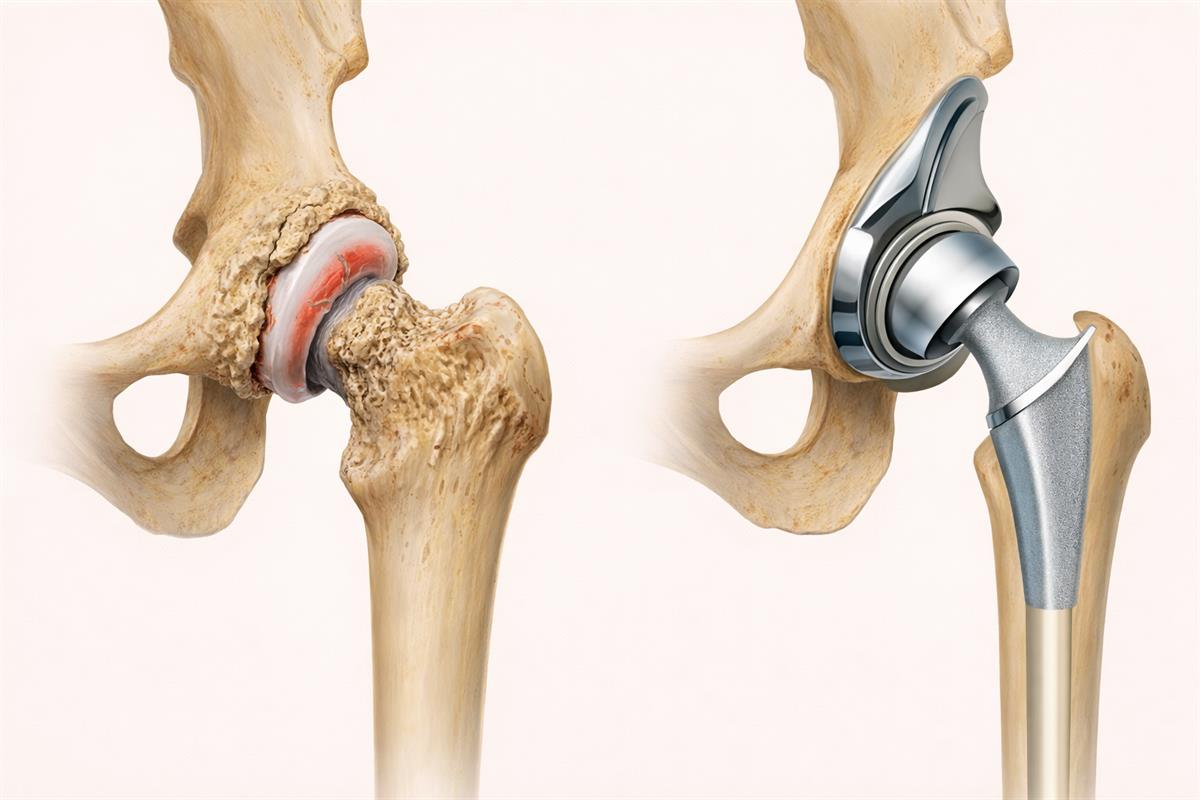
Total Hip Replacement Surgery (THR)
Total hip replacement, also called total hip arthroplasty, is a surgical procedure in which a damaged or diseased hip joint is removed and replaced with artificial components.
The aim is to relieve chronic hip pain, correct deformity, and restore smooth, painless movement when non-surgical treatments no longer provide adequate relief.
When Is Total Hip Replacement Needed
- Persistent hip or groin pain at rest or during walking
- Severe stiffness limiting daily activities
- Difficulty walking, limping, or dependence on walking aids
- Sleep disturbance due to hip pain
- Poor response to medicines, physiotherapy, injections, or lifestyle modification
Common Conditions Leading to THR
- Osteoarthritis of the hip, the most common cause
- Avascular necrosis (loss of blood supply to the femoral head)
- Rheumatoid arthritis and other inflammatory arthritis
- Post-traumatic arthritis following fractures or hip injuries
- Congenital or developmental hip disorders
- Advanced degenerative joint disease
How Is the Surgery Performed
- The damaged femoral head is removed
- The hip socket (acetabulum) is cleaned and reshaped
- A metal cup is fixed into the pelvic bone
- A medical-grade plastic or ceramic liner is placed inside the cup
- A metal or ceramic ball is attached to a stem placed inside the thigh bone
- The new ball fits smoothly into the socket to recreate hip movement
- Surgery duration is usually 60 to 120 minutes
Implant Materials Used in Total Hip Replacement
Cobalt–chromium alloy
Used for strength, durability, and wear resistanceTitanium alloy
Used for its lightweight nature and excellent bone integrationCeramic components
Used for very low wear and smooth movement, especially in younger patientsUltra-high molecular weight polyethylene
Used as a durable, low-friction liner inside the socketAll materials are bio-compatible, extensively tested, and safe for long-term implantation.
Implant Lifespan
- Average implant lifespan is 15 to 25 years or more
- Longevity depends on age, activity level, body weight, surgical technique, implant choice, and rehabilitation
- Modern implants often last longer with proper care
Risks, Disadvantages, and Limitations of Total Hip Replacement
- It is a major surgical procedure requiring anaesthesia and hospital stay
- Risk of infection, which may require prolonged treatment or further surgery
- Risk of blood clots in the legs or lungs, especially in early recovery
- Risk of hip dislocation, particularly in the first few months
- Difference in leg length may occasionally be noticed
- Residual stiffness or muscle weakness may persist
- A small number of patients may have persistent pain or dissatisfaction
- The artificial hip may not feel exactly like a natural joint
- High-impact activities such as running and jumping are discouraged
- Implants have a limited lifespan and may require revision surgery in the future
- Residual Pain Despite Successful Surgery
A small group of patients may continue to experience pain even when X-rays and implant position are satisfactory. This may be due to muscle weakness, tendon irritation, nerve sensitivity, spinal issues, or altered pain perception. Complete pain elimination cannot be guaranteed in every case.
- Hip Dislocation or Instability
Some patients may experience hip dislocation, especially during early recovery if precautions are not followed. This risk decreases significantly with proper rehabilitation, muscle strengthening, and adherence to movement precautions.
- Reduced Range of Motion Compared to Expectations
Hip movement usually improves significantly after surgery, but extreme positions such as deep squatting or sitting cross-legged may remain restricted depending on implant type and preoperative stiffness.
- Mechanical Awareness or Clicking Sensation
Some patients notice clicking sounds or awareness of the artificial joint during movement. These sensations are usually harmless and reduce as muscles strengthen and coordination improves.
- Bone Loss Around the Implant Over Time
Gradual bone thinning can occur around the implant due to stress redistribution. This may not cause symptoms initially but can complicate future revision surgery if required.
- Allergic or Sensitivity Reactions to Implant Materials
Very rarely, patients may develop sensitivity to metal components, leading to unexplained pain or swelling without infection. This requires careful evaluation and may influence implant selection in future procedures.
- Psychological Adjustment and Expectation Mismatch
Some patients struggle emotionally if recovery is slower than expected or if the hip does not feel completely normal. Proper counselling and realistic expectations before surgery are key to patient satisfaction.
- Revision Surgery Due to Implant Failure or Loosening
Revision hip replacement may be required if the implant loosens, wears out, dislocates repeatedly, or becomes infected. Revision surgery involves removing the old implant and replacing it with a new one.
How Much More Difficult Is Revision Hip Surgery
Revision surgery is significantly more complex than the first operation
Bone loss is often present, making fixation more challenging
Surgery time is longer and may require specialised implants
Risk of complications such as infection, blood loss, and dislocation is higher
Hospital stay and rehabilitation period are usually longer
Functional outcomes may be slightly inferior compared to primary hip replacement
Proper care and long-term follow-up can significantly delay or prevent the need for revision surgery.
Why Is Total Hip Replacement Recommended Despite the Limitations
- Irreversible Joint Damage
Advanced hip arthritis permanently damages cartilage and joint shape. Once this stage is reached, the hip cannot regenerate or heal naturally.
- Temporary Relief From Non-Surgical Treatments
Medicines, injections, and physiotherapy offer short-term symptom control without correcting joint damage or restoring normal movement.
- Progressive Loss of Mobility and Independence
Pain leads to reduced movement, muscle weakness, poor balance, and increased fall risk, especially in elderly patients.
- Impact on Daily Life and Mental Health
Chronic hip pain affects sleep, mood, social interaction, and independence, often leading to reduced quality of life.
- Delay Makes Surgery and Recovery Harder
Postponing surgery allows stiffness, deformity, and muscle weakness to worsen, making surgery technically more demanding and recovery slower.
- Addresses the Root Cause, Not Just Symptoms
Total hip replacement removes the damaged joint surfaces and restores alignment, providing predictable pain relief and improved walking ability.
- Long-Term Quality-of-Life Improvement
Despite cost and recovery time, total hip replacement offers long-lasting pain relief, mobility, and independence for patients with severe hip disease.
Who Is an Ideal Candidate
- Severe hip arthritis affecting daily activities
- Failure of non-surgical treatment options
- Realistic expectations regarding outcomes
- Medically fit to undergo surgery
Why Proper Maintenance Matters
- Regular physiotherapy and lifelong muscle strengthening
- Maintaining healthy body weight
- Avoiding high-impact activities
- Early treatment of infections anywhere in the body
- Regular orthopaedic follow-up
Recovery and Rehabilitation
- Hospital stay is usually 2 to 4 days
- Standing and walking with support begin within 24 to 48 hours
- Physiotherapy starts early to restore strength and movement
- Most patients resume routine daily activities within 4 to 6 weeks
- Full recovery and maximum benefit may take 3 to 6 months
- Adherence to precautions and exercises is essential for long-term success